Overview
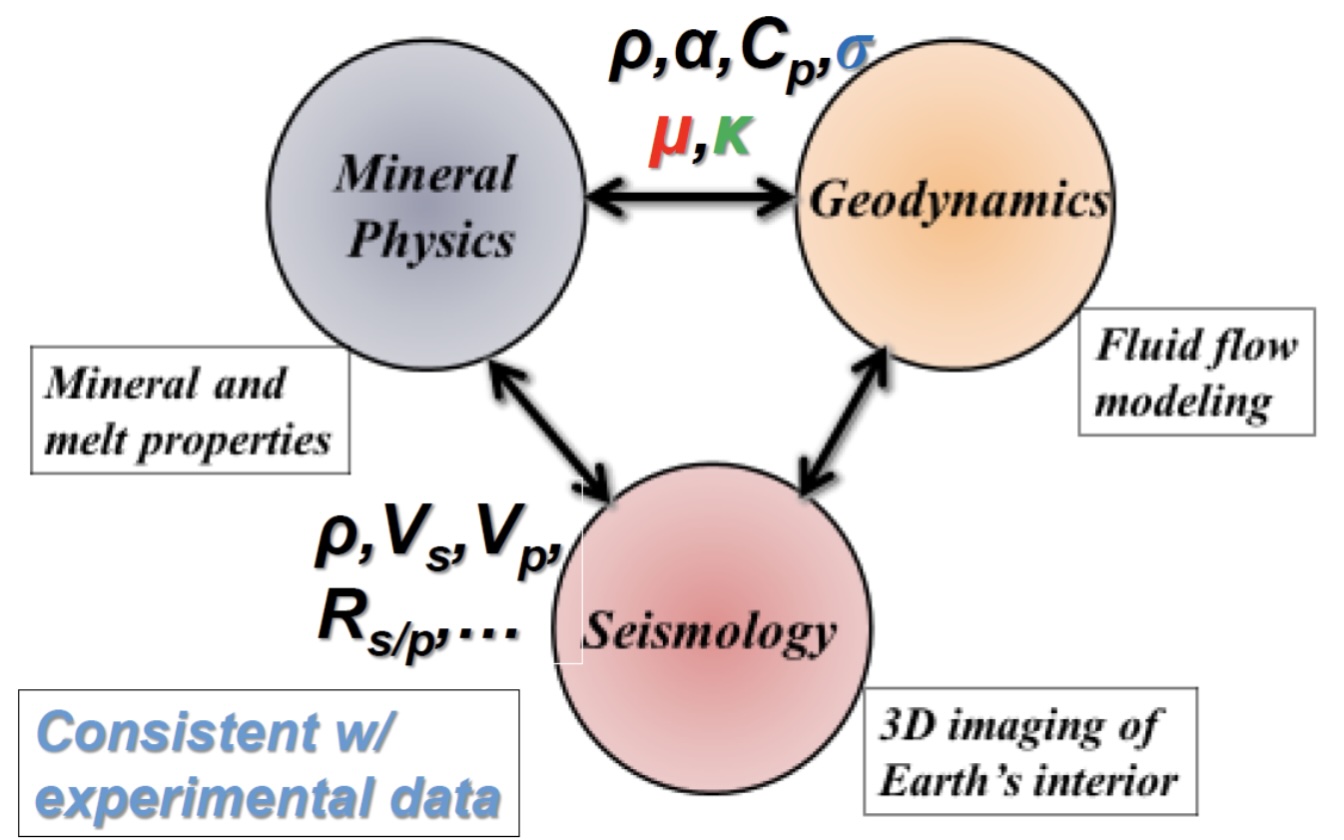
Materials simulations bring powerful methods for predicting the physical properties of complex mineral phases, assemblages, and melts under the extreme conditions expected in Earth's interior (~6,500 K and 3.6 Mbar). They play a central role in probing the deep Earth and have brought us to the threshold of developing a general predictive theory of planetary interiors grounded in their material properties.
This project advances that vision by connecting a multidisciplinary team of scientists to advance the integration between three core fields of computational geophysics: mineral physics, seismology, and geodynamics.